Defending Free Speech, Peaceful Assembly, and Digital Rights
Protecting Democratic Freedoms
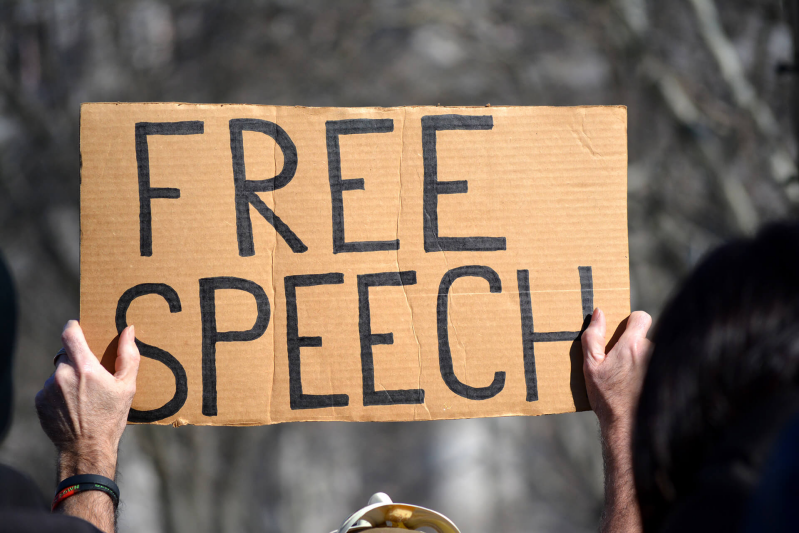
Free speech and the right to peaceful assembly are among the most fundamental pillars of a democratic society. A nation cannot claim to be truly free if its citizens are unable to express their views, challenge those in power, or peacefully advocate for political and social change.
These freedoms are not simply abstract ideals. They are the practical mechanisms through which citizens participate in democracy, influence public policy, expose wrongdoing, and hold governments accountable. Without them, democratic institutions become less responsive, public debate is weakened, and the voices of ordinary Australians are diminished.
We are concerned by the growing trend toward restrictions on public protest, political expression, and civic participation across Australia. While governments have a legitimate responsibility to maintain public order and protect public safety, these objectives must always be carefully balanced against the democratic freedoms that underpin an open society. Restrictions on fundamental rights should only be imposed where they are demonstrably necessary, proportionate, and subject to appropriate democratic oversight.
The Importance of Peaceful Protest
Throughout history, peaceful protest has been one of the most effective tools available to ordinary people seeking political reform. Many of the rights, protections, and freedoms Australians enjoy today were secured through public advocacy, organised campaigning, peaceful demonstration, and the willingness of citizens to challenge established authority.
From workers' rights and women's suffrage to Indigenous rights and environmental protection, social progress has often depended on the ability of people to peacefully assemble and make their voices heard. Democratic societies should encourage civic participation rather than discourage it.
Any attempt to unnecessarily restrict peaceful protest or limit legitimate political expression deserves careful public scrutiny. Laws affecting these rights should be transparent, narrowly targeted, and regularly reviewed to ensure they remain consistent with Australia's democratic values.
Free Speech for All Australians
Freedom of expression allows ideas to be debated, governments to be challenged, and communities to resolve disagreements through discussion rather than coercion. While this freedom is not absolute and must coexist with laws protecting public safety and the rights of others, it should remain one of Australia's highest democratic priorities.
We believe both major parties have failed to adequately address the long-term protection of free speech and civil liberties. Public debate has increasingly focused on short-term political concerns while broader questions about the future of democratic freedoms have received insufficient attention.
Australians should be free to express lawful political opinions, participate in public debate, criticise governments, and advocate for change without unnecessary interference. Protecting these freedoms strengthens democracy by encouraging open discussion, greater accountability, and more informed decision-making.
Protecting Digital Rights
The internet has become the primary platform for public discourse, political participation, journalism, education, activism, business, and the exchange of ideas. As society becomes increasingly digital, the protection of online rights must become a national priority.
Digital spaces now function as modern public forums. Decisions affecting access to information, online privacy, digital communication, and freedom of expression increasingly shape how Australians participate in civic life. These issues deserve the same democratic attention traditionally given to freedoms exercised in physical public spaces.
Australians deserve clear safeguards against excessive censorship, unjustified surveillance, and the concentration of control over digital communication. They should have confidence that their privacy is respected, that government powers are subject to appropriate oversight, and that access to lawful information cannot be restricted without proper justification.
A Digital Rights Charter
We support the development of a comprehensive Digital Rights Charter that establishes clear protections for Australians in the digital age.
Such a charter should protect freedom of expression online, strengthen privacy rights, promote transparency around content moderation and government requests for user information, encourage due process where digital rights are affected, and safeguard the ability of citizens to access information and participate in public debate.
As technology continues to evolve, Australia needs a clear framework that protects individual rights while supporting innovation, security, and public confidence in the digital environment.
Transparent and Accountable Government
A healthy democracy depends not only on the ability of citizens to question, criticise, and challenge those who govern them, but also on governments being willing to operate openly and accountably.
Public trust can only be maintained when institutions are transparent, decisions are made openly, and those entrusted with public power remain subject to meaningful scrutiny. Democracy functions best when citizens have access to accurate information and can understand how public decisions are made.
To strengthen democratic accountability, we support stronger transparency measures, expanded public access to government information, robust anti-corruption safeguards, punishment of officials caught falsifying statistics for electoral gain, and enhanced disclosure requirements for elected officials and public office holders.
Australians have a right to know how decisions are made, how public funds are spent, how lobbying influences government, and whether those entrusted with public office are acting in the public interest. Greater transparency not only deters misconduct but also strengthens confidence in democratic institutions.
Our Commitment
Our vision is clear: a freer Australia where democratic participation is encouraged, free speech is protected, peaceful protest is respected, digital rights are secured, and government remains accountable to the people it serves.
We believe that democracy is strongest when citizens are empowered to speak openly, organise peacefully, access information freely, and participate fully in public life. Protecting these freedoms is not simply about preserving individual rights—it is about ensuring Australia's democratic institutions remain resilient, transparent, and accountable for generations to come.